Glomerular Disease
A comprehensive guide to immunological and structural kidney disorders.
High-Yield Pathophysiology
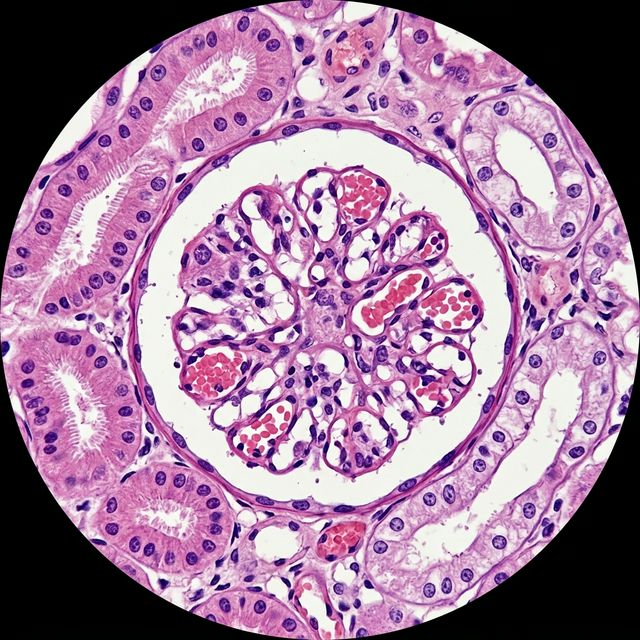
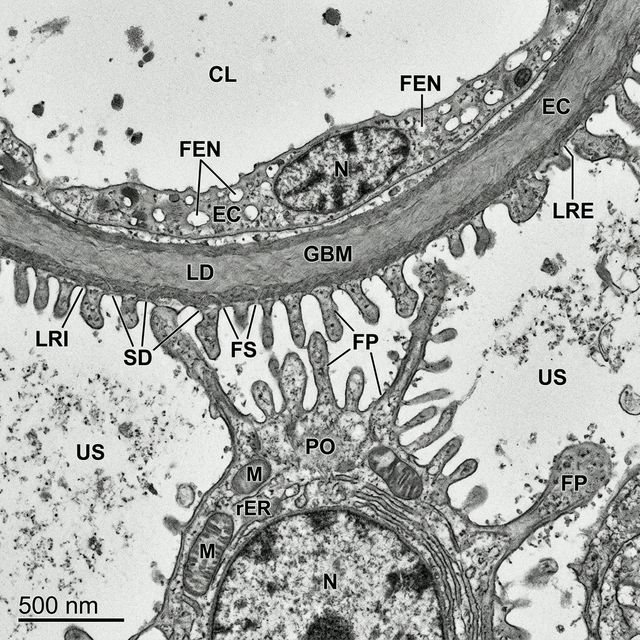
- Disruption of the filtration barrier (endothelial cells, GBM, and podocytes).
- Immune-mediated injury via antibody-antigen complexes or direct podocyte damage.
- Loss of negative charge in Minimal Change Disease leads to selective proteinuria.
- Hypercellularity caused by inflammatory cell infiltration (Leukocytes/Monocytes).
High-Yield Pathophysiology
- Disruption of the filtration barrier (endothelial cells, GBM, and podocytes).
- Immune-mediated injury via antibody-antigen complexes or direct podocyte damage.
- Loss of negative charge in Minimal Change Disease leads to selective proteinuria.
- Hypercellularity caused by inflammatory cell infiltration (Leukocytes/Monocytes).
Pathology Visuals
Differential Diagnosis & Criteria
| Condition | Hallmark Feature | Lab Findings |
|---|---|---|
| Minimal Change | Podocyte effacement | Selective Proteinuria |
| Post-Step GN | Subepithelial "Humps" | Low C3 levels, ASO+ |
| IgA Nephropathy | Mesangial Deposits | Hematuria with URI |
Knowledge Check
Test your understanding of the concepts above.
1. Which of the following is the most sensitive finding for Minimal Change Disease under electron microscopy?
2. A 7-year-old patient presents with periorbital edema and cola-colored urine 2 weeks after a throat infection. What is the expected C3 level?